Interior Renovation in Dubai: How to Plan Your Space, Budget...
15/09/2026
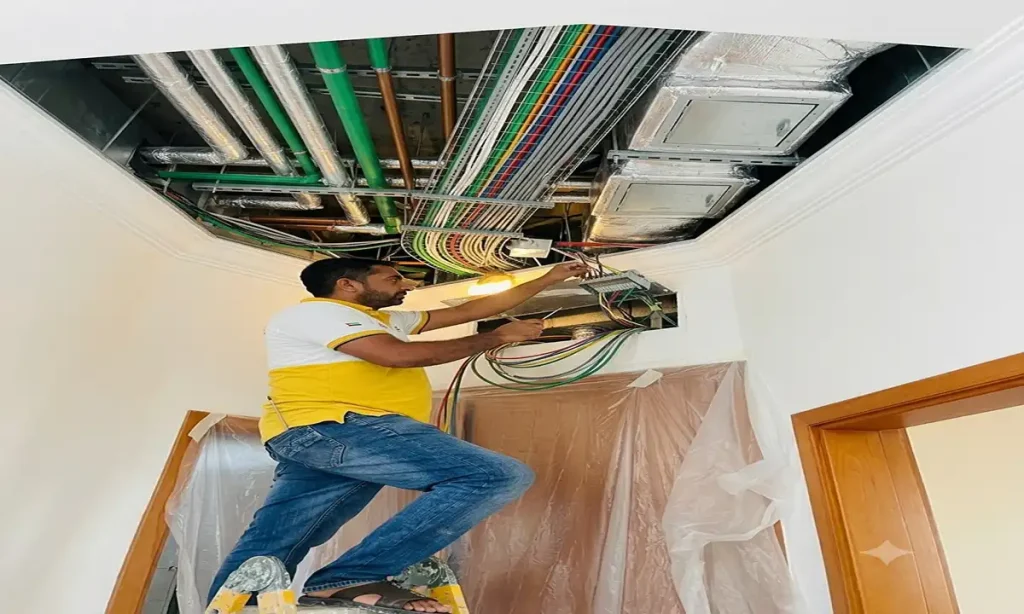
Two villas can sit on the same street, share the same floor area, and still end up with renovation budgets that are miles apart. One owner might need little more than fresh paint, new flooring and updated lighting. The other might discover ageing plumbing, outdated wiring, waterproofing issues and a layout that no longer suits how the family actually lives. Same square footage, completely different project.
This is the part most cost calculators and quick online estimates miss: villa renovation cost cannot be determined accurately from property size alone. Size matters, but it’s only one input in a much longer equation that includes the property’s condition, the scope of work, the specifications chosen and how complex the execution turns out to be.
Renovation projects in Dubai generally fall into a few broad categories. A cosmetic renovation touches surfaces – paint, lighting, minor flooring, small decorative updates. A partial renovation goes deeper, usually into a kitchen, one or two bathrooms, selected flooring and some electrical or plumbing improvements. A full renovation reworks multiple rooms and often the underlying infrastructure alongside the finishes. A luxury or high-end renovation adds premium materials, bespoke joinery, custom interiors and sometimes smart-home systems on top of that.
Where a project lands on this spectrum – and what the villa actually needs once the work begins – is what really shapes the final number. Below are the ten factors that most consistently move a villa renovation budget up or down, along with a practical way to plan for them.
It’s tempting to want a single figure, but any number quoted without context – condition of the property, size, specification level and scope – isn’t a reliable guide for your specific villa. Instead of offering fixed pricing that may not reflect your situation, it’s more useful to understand where a project sits on the renovation spectrum and what that generally involves:
Cosmetic renovation typically covers painting, updated lighting, minor flooring repairs or replacement in select areas, and small decorative changes. It’s the fastest and least disruptive category, and the one where costs are easiest to predict.
Partial renovation usually centers on the kitchen and bathrooms, along with selected flooring, joinery and some MEP (mechanical, electrical, plumbing) improvements. This is where budgets start to widen, because kitchens and bathrooms involve multiple trades working together.
Full renovation extends across several rooms and often includes infrastructure work – rewiring sections of the villa, replacing plumbing runs, addressing waterproofing, and upgrading finishes throughout. Costs here depend heavily on what’s found once walls and floors are opened up.
Luxury renovation adds premium and often imported materials, custom-built joinery, bespoke interior detailing and higher-specification systems. The scope may be similar to a full renovation, but the specification level changes the budget substantially.
Any numerical range you come across online should be treated as indicative at best – a starting point for conversation, not a quote. The only way to get a dependable figure is to have the property assessed and the scope defined.
Built-up area is an obvious starting point, but it’s rarely the whole story. The number of floors, the count of bedrooms and bathrooms, how many kitchens are involved, whether there’s a maid’s room or driver’s room, outdoor spaces like a majlis or garden structure, ceiling heights, and how complex the internal layout is – all of these add or remove work.
A villa with a straightforward, boxy layout is generally more efficient to renovate than one with irregular room shapes, split levels, or extensions added over the years. Two villas of identical square footage can end up with different budgets simply because one has more internal walls, more corners, more transitions between materials, or more bathrooms per floor. Layout complexity translates directly into labor hours, even when the finish specification is the same.
This is often the single biggest variable in the entire budget, and the one homeowners underestimate most. A villa that has been well maintained needs far less structural and systems work than one that has been neglected or is simply older.
Ageing plumbing, outdated electrical panels and wiring, damaged or uneven flooring, signs of water leakage, insufficient waterproofing in wet areas, deteriorated wall finishes, inefficient or failing AC systems, and doors and windows that no longer seal properly – any of these can turn what looked like a cosmetic job into something closer to a full renovation.
This is where the idea of hidden costs comes in. It isn’t about assuming the worst; it’s about recognizing that some issues genuinely can’t be identified until surfaces are opened. A wall that looks fine can conceal old wiring that doesn’t meet current standards. A bathroom floor that looks solid can be sitting on failed waterproofing that’s only visible once tiles come up. Planning for this possibility, rather than being surprised by it, is part of realistic budgeting – not a reason to worry unnecessarily.
Homeowners often use terms like “refresh” or “full renovation” loosely, but they describe very different projects.
| Renovation Type | Typical Scope | Disruption Level |
| Refresh / Cosmetic | Paint, lighting, minor flooring, small fixes | Low |
| Partial | Kitchen, bathrooms, selected flooring, some MEP | Moderate |
| Full | Multiple rooms, infrastructure, layout adjustments | High |
| Luxury | Full scope with premium materials and bespoke elements | High |
A “refresh” generally means the layout and core systems stay as they are – the work is visual. A full renovation usually means opening up walls, floors or ceilings, and possibly reworking the layout itself. Being clear with yourself – and with anyone quoting the work – about which category you actually mean prevents a lot of budget confusion later.
Kitchens tend to consume a disproportionate share of a renovation budget, and it’s easy to see why once you break down what’s involved: cabinetry, countertops, appliances, backsplash, plumbing relocation or upgrades, electrical circuits for appliances and lighting, flooring, hardware, and in many cases custom joinery.
Standard cabinetry with laminate finishes and mid-range countertops will cost considerably less than bespoke joinery with stone or engineered surfaces and integrated appliances. The gap between a standard kitchen specification and a fully custom one is usually the single largest specification-driven swing in a villa renovation budget – larger than most other rooms.
Bathrooms are compact, but they’re dense with cost drivers: sanitaryware, tiling, waterproofing, plumbing, shower systems, vanity units, mirrors, lighting, ventilation and accessories all have to come together in a relatively small footprint.
Waterproofing deserves particular attention. It’s not visible once the room is finished, but it’s one of the most consequential parts of a bathroom renovation – and if the existing waterproofing has failed, that work needs to be redone properly before any new tiling goes in. Plumbing runs hidden behind walls or under floors can also add unplanned cost if they need to be rerouted or replaced rather than simply reused.
Material choice has a big effect on cost, but there’s no universally “correct” option – the right choice depends on the room, how it’s used, how much maintenance the owner is willing to do, and the overall budget.
Ceramic tiles are generally the most economical option. Porcelain sits above that, offering better durability and a wider range of finishes. Natural stone and engineered wood typically cost more, both in material and installation. On walls, standard paint, premium paint and decorative treatments follow a similar pattern – the visual difference can be significant, but so can the price gap.
None of these are automatically the “better” choice; a high-traffic family villa may be better served by a durable porcelain than a high-maintenance natural stone, regardless of budget.
Moving a wall, changing a room’s function, widening a doorway or altering a built-in structure sounds simple in conversation but can meaningfully change a project’s cost and timeline. Structural changes often require assessment before anyone can confirm what’s feasible, what needs reinforcement, and what the surrounding systems – electrical, plumbing, AC ducting – will need to accommodate.
Requirements for approvals or permissions vary depending on the property, the community it sits in, and the nature of the proposed work, so it isn’t possible to state a single rule that applies everywhere. What matters practically is building in time and budget for a proper feasibility check before layout changes are finalized, rather than assuming they can simply be actioned on-site.
MEP work is the part of a renovation that’s easiest to underestimate, because homeowners naturally focus on what they’ll see every day – finishes, fixtures, furniture – rather than what’s behind the walls.
Rewiring, adding outlets, redesigning lighting circuits, replacing plumbing lines, addressing drainage, servicing or upgrading air conditioning, improving ventilation, replacing water heaters, and – increasingly – wiring for smart-home systems all fall under this category. In an older villa, MEP upgrades can end up being one of the largest line items in the entire budget, even though none of it is visible in the finished result. Underestimating this category is one of the most common reasons renovation budgets run over.
Material tier has a compounding effect across every room, not just one. Standard materials keep costs predictable and are widely available. Mid-range materials offer more design flexibility with a moderate cost increase. Premium and imported materials raise both cost and lead time, since they often need to be sourced and shipped rather than pulled from local stock. Bespoke finishes and custom joinery add design fees and fabrication time on top of material cost.
None of this means premium or imported materials should be avoided – many villa owners specifically want them – but it does mean procurement timelines and cost premiums for these choices should be factored into the schedule from the start, not discovered midway through the project.
The final major factor is how complex the project is to actually execute. This includes how many trades need to be coordinated, how accessible the villa is for deliveries and equipment, working conditions on site, expected project duration, the amount of demolition involved, how waste is removed, how materials are handled and stored, the level of supervision required, and how much custom or made-to-measure work is involved.
A project that looks simple on paper – say, three rooms getting new flooring and paint – can become considerably more expensive once you factor in a villa with limited access, multiple trades needing to work in sequence, and custom elements that require precise coordination. Complexity, not just scope, drives labor cost.
A few categories consistently catch homeowners off guard because they’re not part of the “visible” renovation:
Step 1 – Define exactly what needs to change. Be specific about which rooms, which systems, and whether the goal is cosmetic, partial or full renovation.
Step 2 – Inspect the existing property. A proper walkthrough – ideally with someone qualified to assess plumbing, electrical and structural condition – reveals issues that aren’t obvious from a casual look.
Step 3 – Separate essential repairs from optional upgrades. Knowing what must be fixed versus what would simply be nice to have gives you room to adjust the budget without compromising on necessary work.
Step 4 – Set material and finish specifications early. Vague specifications lead to vague quotations, which lead to budget surprises later.
Step 5 – Request detailed quotations, not single-line estimates, from more than one source.
Step 6 – Compare inclusions and exclusions carefully rather than just the bottom-line figure.
Step 7 – Allow a contingency for the work that can only be identified once the project is underway.
Step 8 – Avoid major design changes after construction begins. Mid-project changes are consistently more expensive and more disruptive than the same decision made during planning.
Comparing quotations by total price alone is one of the easiest ways to end up over budget. Two quotations for the “same” renovation can differ significantly once you look at what’s actually included: scope of work, material specifications, quantities, labour, MEP work, demolition, waste removal, design input, project management, listed exclusions, warranty terms and payment milestones – including how variations or change orders are handled.
Here’s a practical example of how this plays out: imagine two quotations for the same bathroom renovation, one noticeably cheaper than the other. On closer inspection, the lower quotation excludes waterproofing rework and assumes the existing plumbing can be reused without modification. If the plumbing turns out to need replacing – which is common in older properties – that “savings” disappears, and the project may end up costing more than the higher quotation would have, once the additional work is added as a variation.
Cost control doesn’t have to mean cutting corners. A few strategies tend to work well:
Choosing the cheapest materials or the cheapest contractor available isn’t the same as controlling cost – it often just shifts the expense to rework later.
A full renovation completed in one continuous project tends to be more efficient overall – trades can be scheduled back-to-back, and the villa is only disrupted once. It generally requires a larger upfront budget and a period where the property isn’t fully liveable.
A phased renovation spreads the work – and the cost – over a longer period, which can make it more manageable financially. The trade-off is that some efficiency is lost between phases, and certain systems-level work (like electrical or plumbing upgrades) may be more disruptive to revisit later if it wasn’t addressed early.
Which approach makes more sense depends on your financial timeline, whether you’re living in the villa during the work, and how urgently the renovation is needed.
There’s no single renovation price that applies to every villa in Dubai, and any figure offered without knowing your property’s condition, size and intended scope should be treated with caution. The most reliable budget doesn’t come from a calculator – it comes from understanding what your specific villa actually needs, defining the scope clearly, deciding on specifications early, and getting a detailed, itemised quotation before any work begins. Once you’ve moved from “what might this cost” to “here’s exactly what needs doing,” planning the renovation – and controlling its budget – becomes considerably more manageable.
If you’re ready to move from cost planning to execution, working with an experienced villa renovation services in Dubai team can help translate this budget planning into an accurate, property-specific quotation.
FAQs
How much does it cost to renovate a villa in Dubai?
There’s no fixed figure, because cost depends on the villa’s size, current condition, and whether the work is cosmetic, partial, full or luxury in scope. A detailed property inspection and clearly defined scope are the only reliable way to arrive at an accurate number.
What is the biggest factor affecting villa renovation cost?
The existing condition of the property is usually the largest single variable. Outdated electrical systems, ageing plumbing, waterproofing issues and structural concerns can add significant cost that isn’t visible until work begins.
Is renovating an old villa more expensive?
Often, yes. Older villas are more likely to need electrical, plumbing and waterproofing upgrades alongside cosmetic work, which increases both cost and project complexity compared with a newer, well-maintained property.
How much does a villa kitchen renovation cost?
It varies widely depending on cabinetry, countertop material, appliances and whether the work involves standard or custom joinery. Kitchens typically represent one of the largest single-room costs in a villa renovation.
How can I control my villa renovation budget?
Define the scope precisely, get a full property inspection before finalising the budget, compare quotations on inclusions rather than total price, and set aside a contingency for work that can only be identified once construction starts.
What should a renovation quotation include?
A detailed quotation should clearly state scope of work, materials and quantities, labour, MEP work, demolition and waste disposal, exclusions, payment milestones and how variations are handled.
Should I renovate a villa in phases?
It depends on your budget and how urgently the work is needed. A single continuous renovation is usually more efficient, while phasing spreads cost over time but can lose some efficiency between stages.
How much contingency should I allow for renovation?
There’s no universal figure, but building in a reasonable buffer for unforeseen work – particularly for older properties – is a standard part of realistic budgeting, since some issues can only be identified once walls or floors are opened.