AC Not Cooling in Dubai: Causes, Fixes and When to...
28/11/2026
Dubai apartments are cooled in one of two ways: a chilled water system with a fan coil unit in each flat, usually called chiller AC, or a split AC with its own outdoor unit. Which one you have decides who is responsible when it breaks, what the repair involves and what you pay each month. This guide explains the difference in plain terms.
High-rise towers in Dubai Marina and Downtown Dubai commonly use chilled water. JVC has a mix: some buildings are on chilled water while many low-rise blocks, townhouses and villas run split or ducted split systems. Always confirm with your building management or tenancy contract, because it varies building by building.
In a chilled water building the system is shared, so responsibility is split too:
Most single-apartment faults are on the apartment side: a clogged filter, a blocked drain causing a ceiling leak, a seized actuator or a failed thermostat. These are jobs for an AC technician, not the cooling provider.
A split system belongs entirely to the property. Major repairs are generally the landlord’s responsibility and routine upkeep the tenant’s, but the tenancy contract sets the exact split, so check it before paying for a repair. Typical faults are gas leaks, dirty coils, failed capacitors and drain blockages.
| Chiller (FCU) | Split AC | |
|---|---|---|
| Outdoor unit | None in the apartment | One per system |
| Cooling bill | Cooling provider or service charge | DEWA electricity |
| Common faults | Actuator, thermostat, drain leak, dirty FCU | Gas leak, capacitor, dirty coils, compressor |
| Building approval for work | Often needed for access and water isolation | Usually only for outdoor unit access |
Both types need filters cleaned regularly and a full service at least once a year, ideally before summer. FCUs also benefit from coil and drain tray cleaning and, in older towers, duct cleaning. Split units need coil washing and a gas pressure check. An annual maintenance contract covers these visits on a schedule.
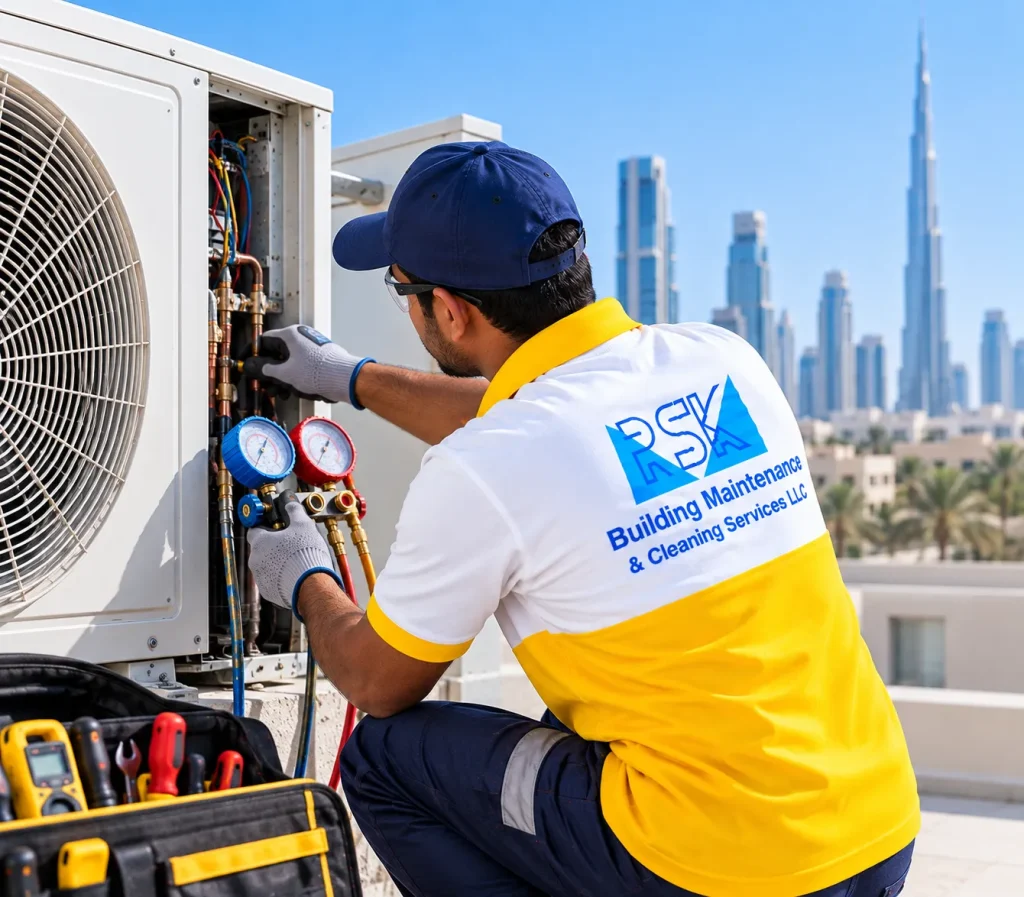
RSK Fit-out & Building Maintenance Service LLC repairs both FCUs and split units. See AC repair in Dubai Marina, AC repair in JVC and AC repair in Downtown Dubai, or our main AC repair in Dubai and AC maintenance pages. We coordinate access with building management where it is required.
“Chiller free” in a listing means the landlord or building covers the chilled water charge. You still pay for the electricity the FCU fan uses, and FCU repairs inside the apartment are separate.
Ask neighbours or security whether other flats are affected. If it is only your apartment, the fault is most likely in your FCU, valve or thermostat, and an AC technician can fix it.
It depends on the building’s cooling tariff, the unit’s age and how it is used, so there is no single answer. Clean filters and a sensible setpoint of around 24°C lower the cost on both.