Electrical Wiring Inspection: What Homeowners Should Check Before Problems Occur
16/10/2026
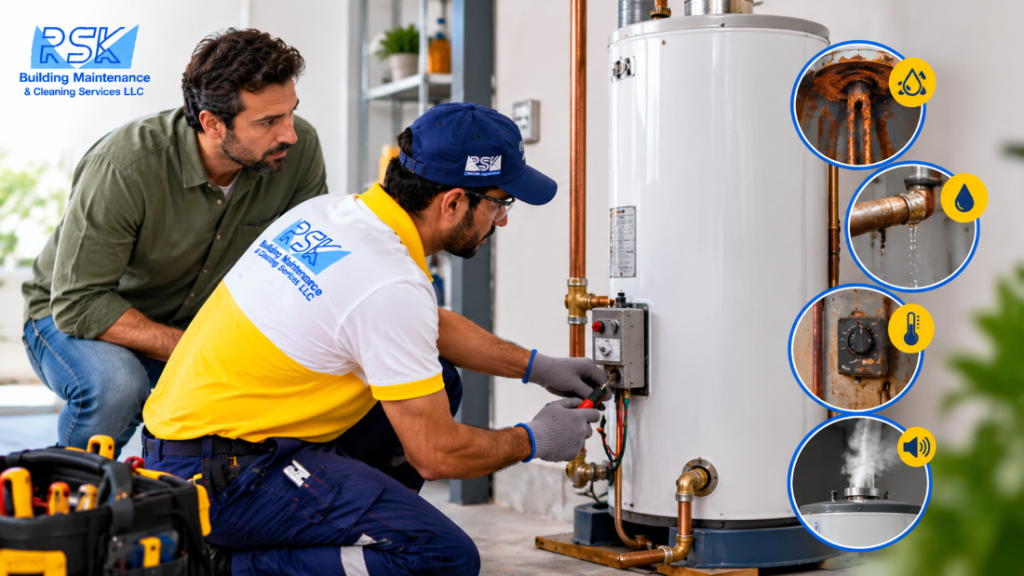
There’s nothing like a cold shower in the middle of a busy morning to remind you how much you rely on your water heater. Most of the time it works quietly in the background, so you barely think about it. Then one day the water won’t heat up, a puddle appears under the tank, or the unit starts making strange noises.
The good news is that many water heater problems start with small warning signs. If you catch them early, you can often avoid a costly breakdown, water damage, or a safety risk.
In this guide, we’ll go through the most common water heater problems, what usually causes them, which signs you shouldn’t ignore, what you can safely check yourself, and when it’s time to call a professional plumber.
Understanding the basics makes it easier to spot what’s going wrong.
Most homes use a storage water heater, which is an insulated tank that heats water and keeps it ready. Inside, an electric heating element warms the water, and a thermostat tells it when to switch on and off. A pressure relief valve protects the tank from dangerous pressure, and many units have an anode rod, a sacrificial metal rod that attracts corrosion so the tank itself lasts longer.
Some homes use instant (tankless) heaters instead, which heat water as it flows through the unit. They work differently, but they can suffer from similar issues like scale buildup, electrical faults, and low flow.
This is the problem people notice first. Possible causes include:
If the unit has no power, or the element is burnt out, the water won’t heat no matter how long you wait.
If you get warm but not hot water, the cause is often:
Scalding water isn’t just uncomfortable. It’s a safety risk, especially for children and older people. The usual culprits are a faulty thermostat or a heating element that doesn’t switch off. If your water is suddenly much hotter than before, switch off the unit and get it inspected.
A leak should never be ignored. It might come from:
A small drip at a connection can sometimes be fixed easily. A leak from the tank body usually means the tank has failed and needs replacing.
Banging, popping, rumbling, or hissing from your water heater is a sign that something is off. The most common reason is sediment and scale buildup at the bottom of the tank. As the element heats the water trapped under the sediment, it creates bubbles that pop and rumble. Over time, this can overheat the tank, shorten its life, and cut efficiency.
If your hot water looks brown or orange, the tank or the pipes may be corroding. Check whether the discolouration appears only in hot water. If cold water runs clear, the water heater is probably the source.
A metallic or rotten smell in hot water can point to bacterial growth in the tank or a reaction involving the anode rod. It’s worth having the system inspected and flushed.
If hot water comes out weakly while cold water flows normally, the issue could be scale buildup in the pipes or the heater’s inlet and outlet, a partly closed valve, or a failing unit.
If your breaker trips whenever the heater turns on, there may be an electrical fault, such as a damaged element or faulty wiring. This is a safety issue, so avoid repeatedly resetting the breaker. Switch the heater off and call a professional.
A sudden jump in your electricity bill can mean your water heater is working harder than it should. Scale buildup, a failing thermostat, or poor insulation can all make the unit use more power to deliver the same hot water.
Most issues come down to a handful of root causes.
Don’t wait for a complete breakdown. Watch for these early signals:
If you notice one of these, take it as a sign to schedule an inspection rather than ignoring it.
Some quick checks are safe and can save you a call-out. Always put safety first. If you aren’t sure, stop and call a professional.
Water and electricity are a dangerous mix, and a water heater combines both.
These jobs carry a real risk of electric shock, scalding, or flooding, so they’re best left to a qualified technician.
Some problems can wait for a convenient appointment. Others are urgent.
Call a plumber right away if:
Schedule a professional visit soon if:
In Dubai apartments and villas, a leaking heater can also damage ceilings, walls, and neighbouring units, so acting quickly can save you from a much bigger repair and possible disputes with the building management or the unit below.
A good plumber will help you weigh this up, but here’s a rough guide.
Repair makes sense when:
Replacement makes more sense when:
Remember to consider the total cost over time, not just today’s prices. A new, efficient unit can pay back part of its cost through lower electricity use.
A little routine care goes a long way.
A trained plumber does more than patch a symptom. They find the real cause, work safely around electricity and water, use the right parts, and tell you honestly whether a repair or a replacement is the better option. A proper repair also reduces the chance of the same problem returning a few weeks later.
If you’re in Dubai and facing a water heater issue, the team at RSK Service can help. Our technicians handle diagnosis, repairs, replacements, and maintenance, so you aren’t left without hot water for long. Explore our plumbing services in Dubai or contact us to book a visit.
The most common causes are a tripped breaker, a failed heating element, a faulty thermostat, or wiring issues. Check that the unit has power and that the breaker hasn’t tripped. If it still doesn’t heat, call a plumber.
Leaks can come from loose fittings, a faulty pressure relief valve, or a corroded tank. If the leak is from the tank itself, the unit usually needs replacing. Switch it off and call a plumber promptly.
Rumbling, popping, or banging noises are usually caused by sediment and scale at the bottom of the tank. A professional flush or service can often fix it, but ignoring it can shorten the unit’s life.
A storage water heater typically lasts around 8 to 12 years, depending on the model, water quality, and how well it’s maintained. Regular servicing can help it last longer.
Simple checks like the breaker and thermostat setting are safe. Repairs involving wiring, valves, or the tank carry electrical and scalding risks and should be done by a qualified technician.
Annual servicing is a good habit, especially in areas with scale-prone water. A yearly check can catch worn parts and reduce the risk of sudden failure.
It may be due to heavy sediment reducing the tank’s effective capacity, a failing heating element, or a heater that’s too small for your household’s needs.
Rusty water suggests corrosion in the tank or pipes. A metallic or unpleasant smell can point to bacterial growth or anode rod issues. Both should be inspected by a plumber.
Repair is usually fine for a younger unit with a single faulty part. If the heater is old, leaking from the tank, or breaking down repeatedly, replacement is often the better long-term choice.
Yes. Scale buildup, a failing thermostat, or damaged parts can force the heater to use more power. A sudden bill increase is worth investigating.
Water heater problems rarely appear out of nowhere. There are usually clues first: a longer wait for hot water, a new noise, a small leak, or a higher electricity bill. Pay attention to them, do the simple safe checks, and call a professional when the issue involves electricity, leaks, or safety.
Regular maintenance, prompt repairs, and a sensible repair-or-replace decision will keep your hot water running reliably, and save you money and stress in the long run.